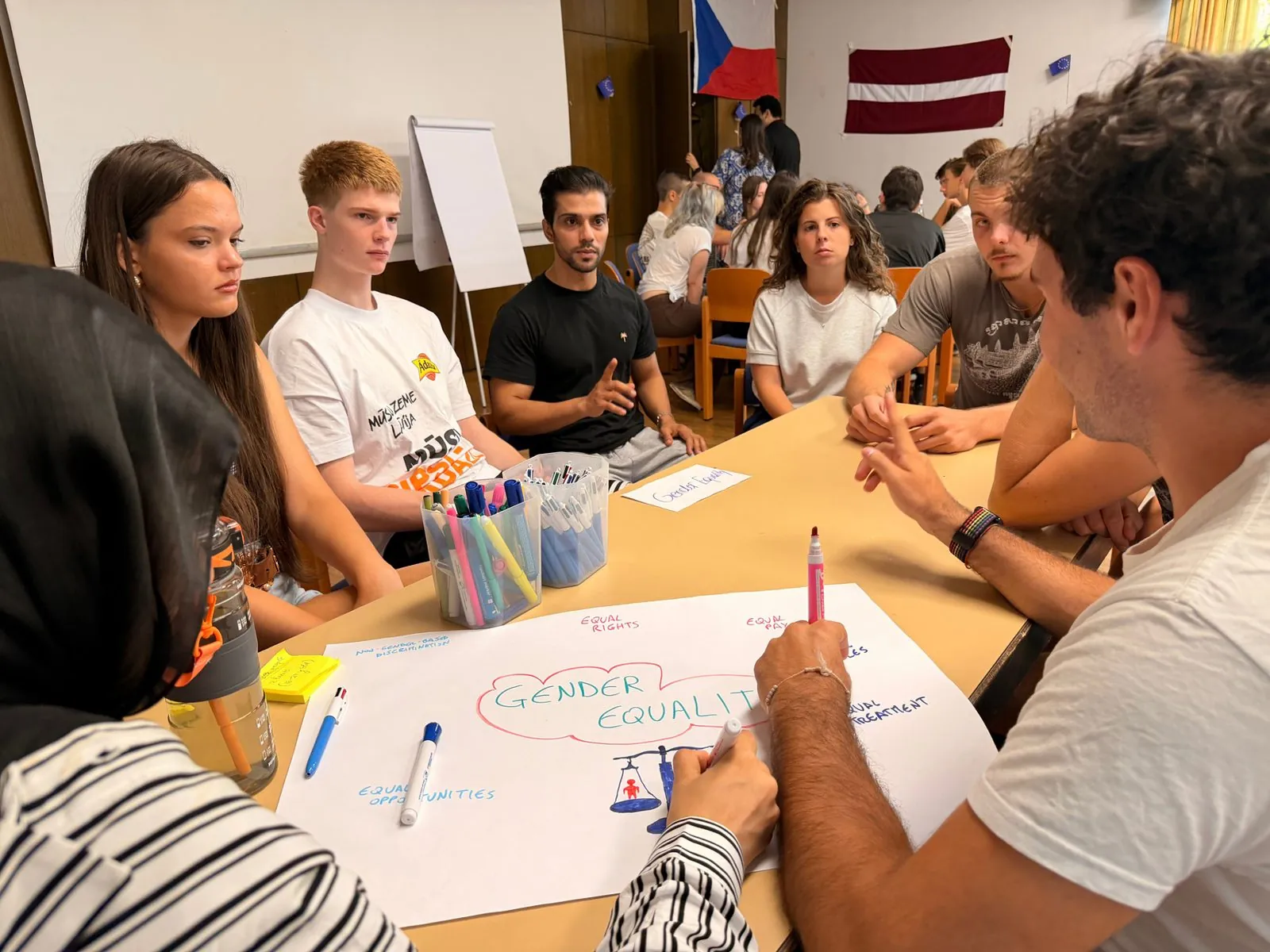
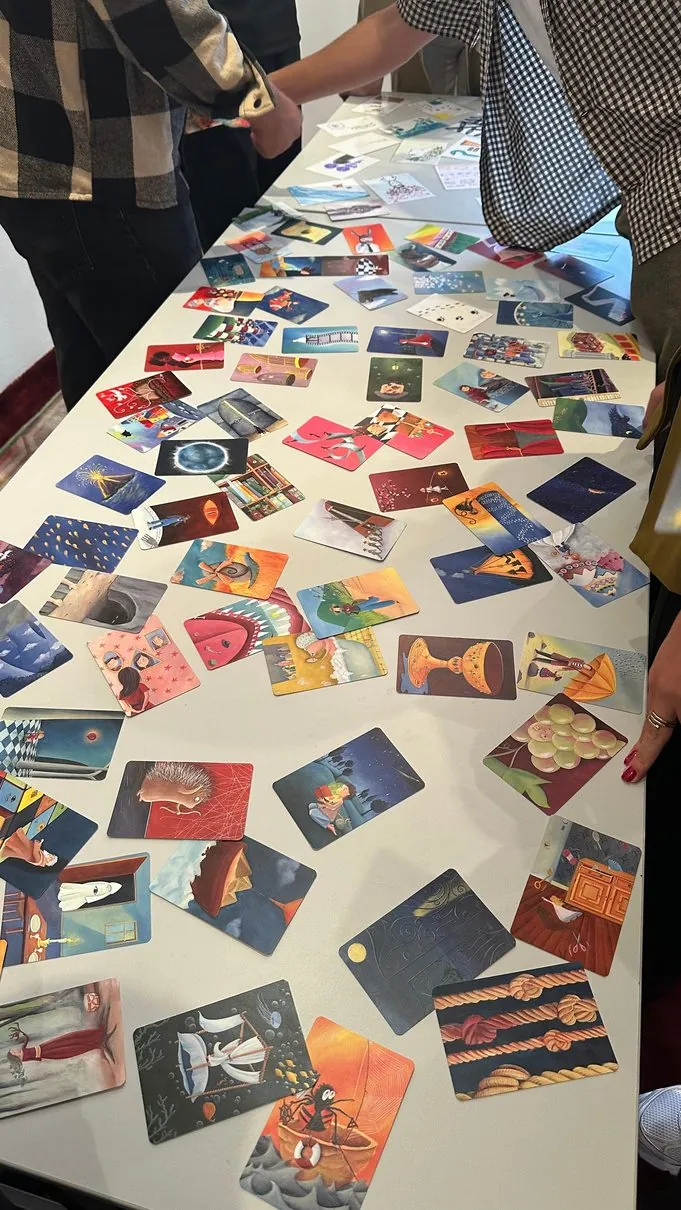
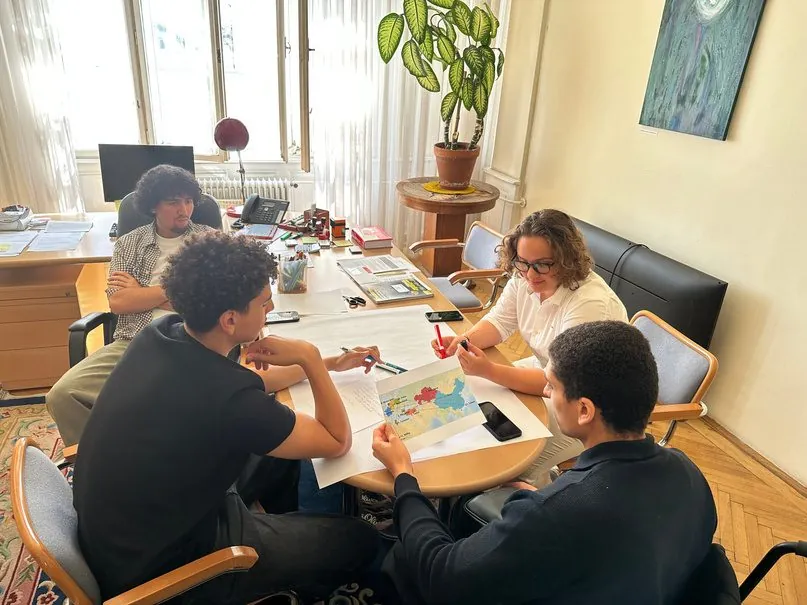
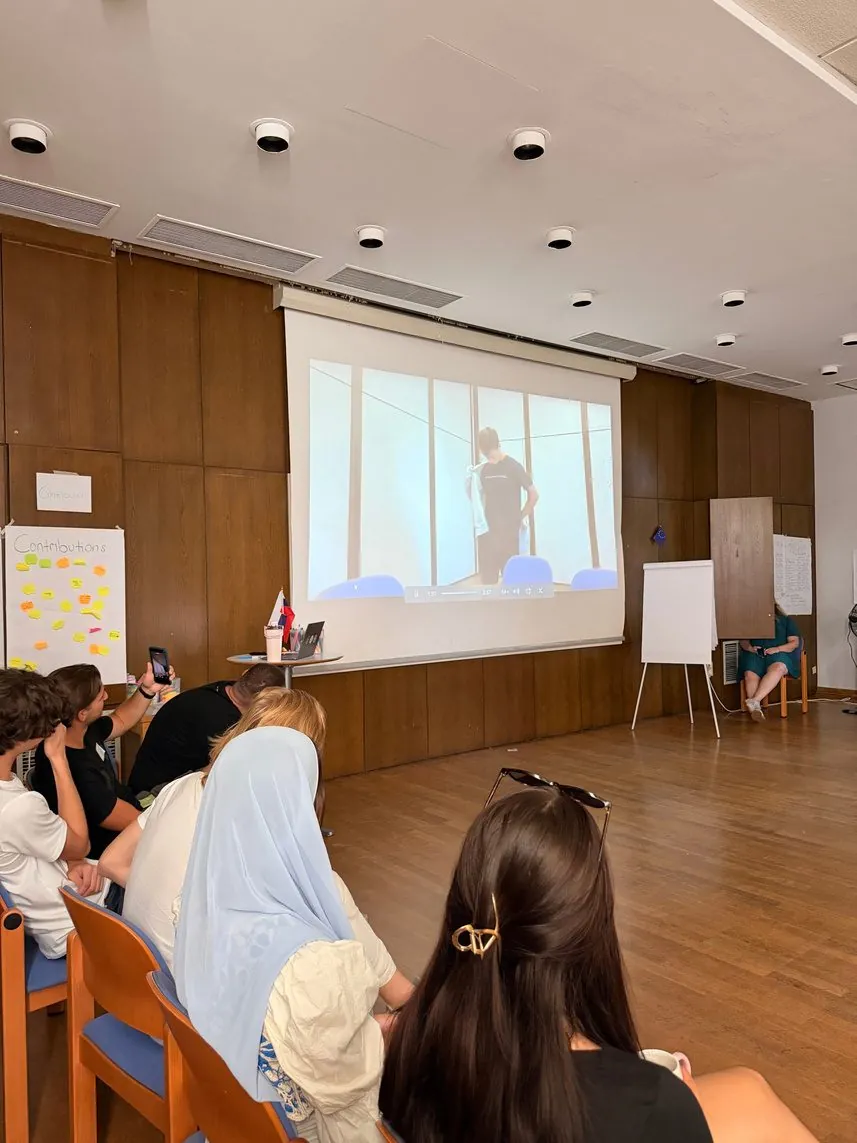
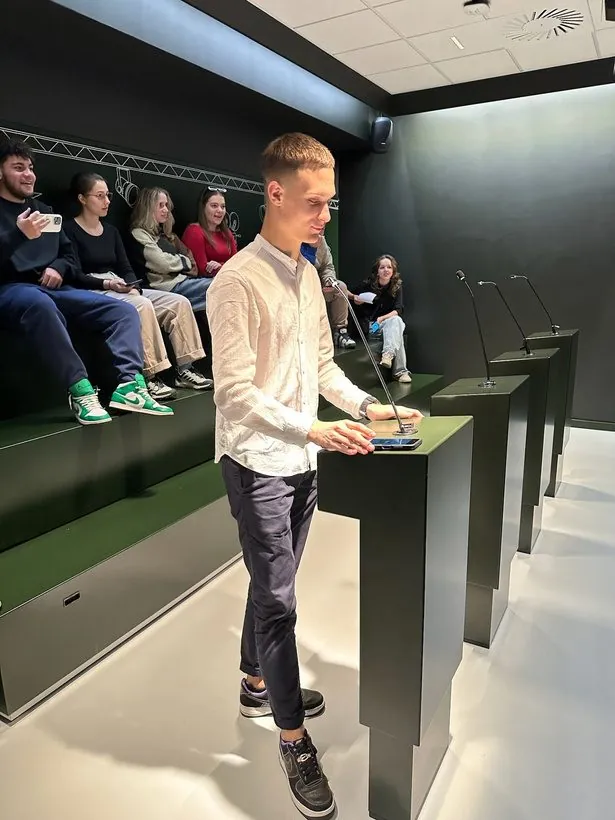
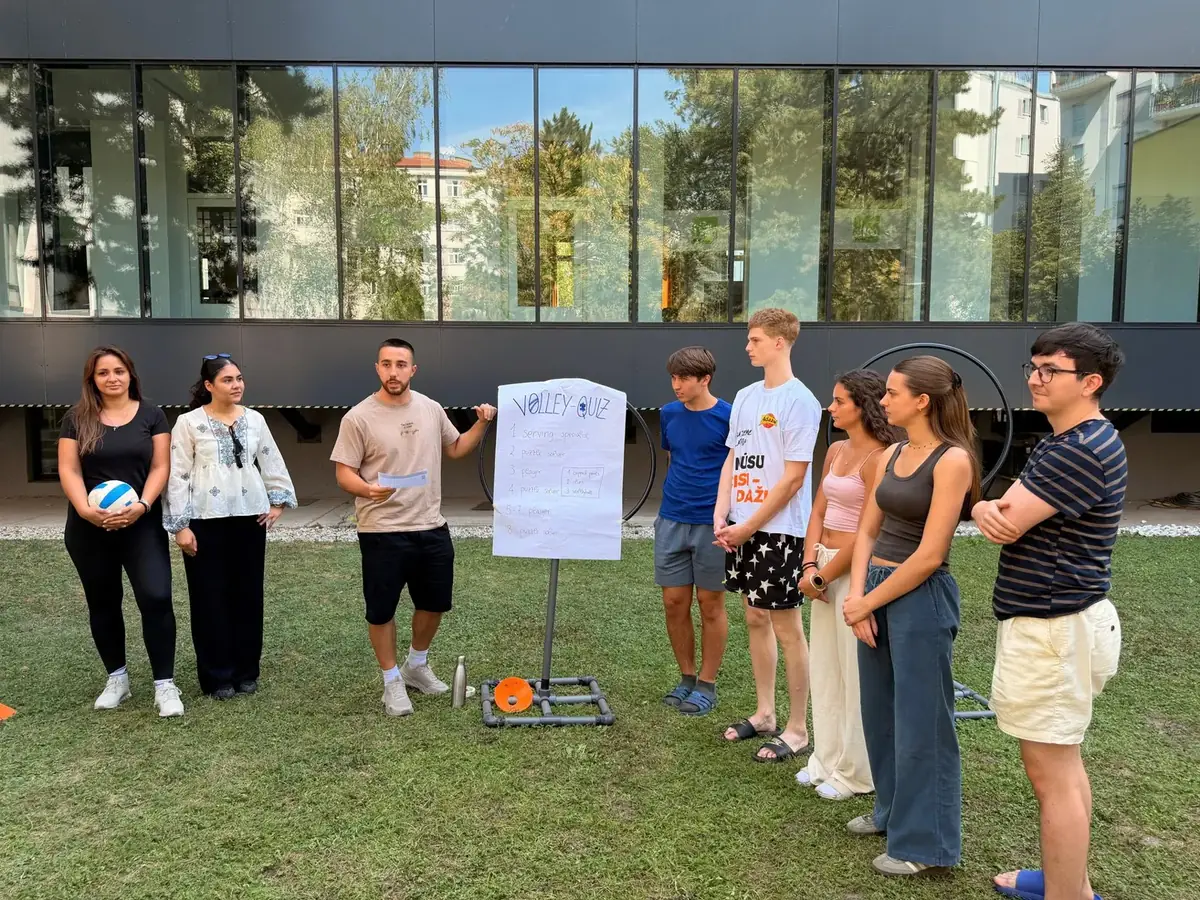
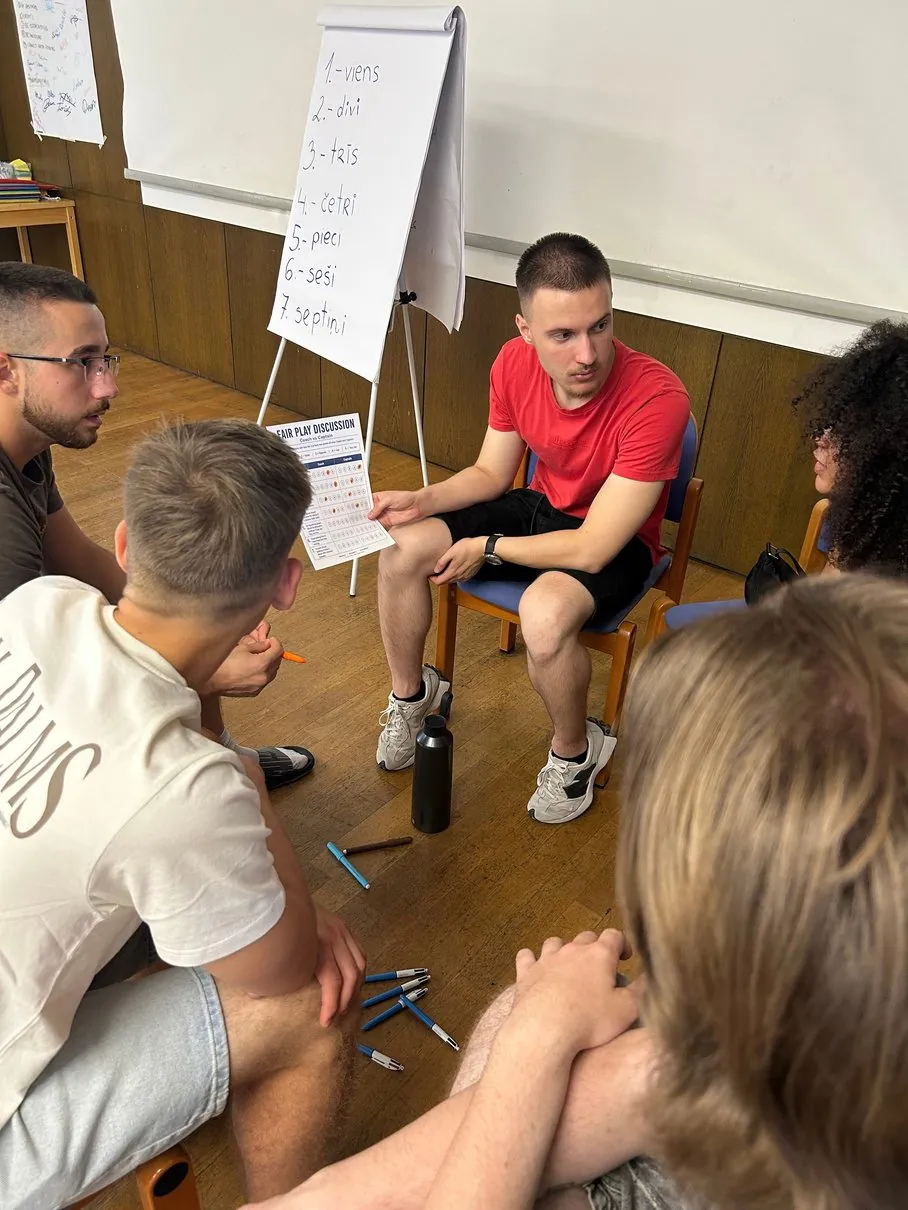
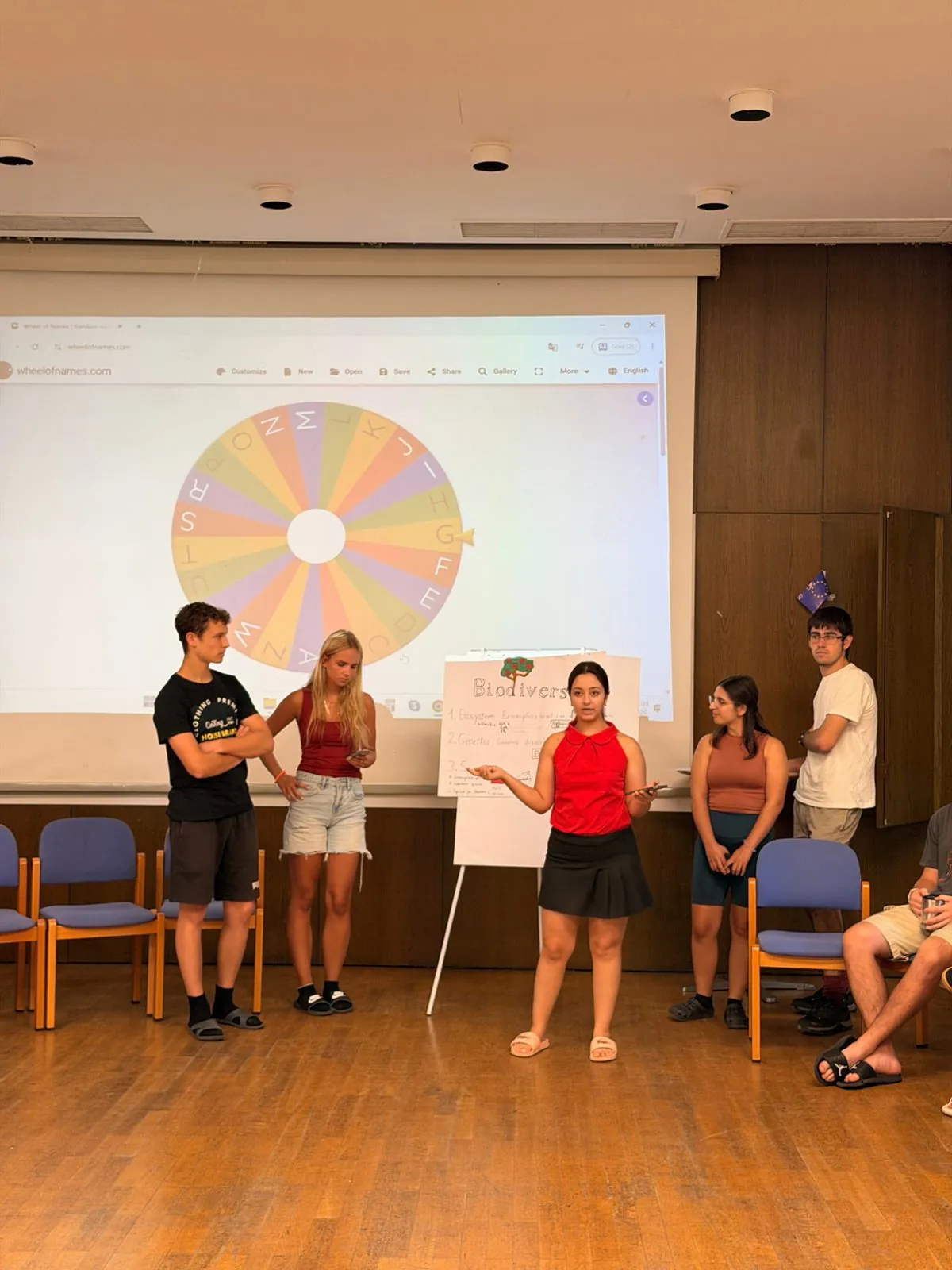
Workshops and study visits for classes from age 13, career orientation days for students aged 14 to 19, and workshops for teachers — at your school or with us in Vienna, in German or English.
Experience-basedInteractiveIn German or EnglishWith a certificate
ACCELERAS is a Vienna-based organisation for training, research and European projects. We are partners in 14 European projects and work every day with learners, teachers and trainers.
In schools we bring what our European projects produce: tested methods, current topics and an attitude that takes young people seriously.
Workshops can be freely combined and adapted to grade, curriculum topics and time frame.
01 · Media literacy
Fake or Fact?
What’s actually true here, and how do I know?
Disinformation, deepfakes and algorithms shape young people’s everyday lives. In this workshop students learn to check content systematically, place sources in context and understand the mechanics behind filter bubbles, in their own fact-check challenge using real examples.
What students learn
Spot disinformation – see through typical patterns, bots and deepfakes
Check sources – reverse search, fact-check tools, finding the original
Understand algorithms – how feeds are built and filter bubbles work
Produce your own – a fact-check challenge in teams
How it runs
1Warm-upReal or fake? quiz
2InputPatterns and tools
3ChallengeTeams check cases
4ReflectionPitch and transfer
2–5 h10–20 studentsfrom age 13Certificate
02 · Financial literacy
My money, my future
From your first budget to online money traps.
How much does my life actually cost? In a simulation game, students manage their own budget, make spending decisions and experience how quickly debt builds up. Plus a critical look at digital payments, subscription traps and finfluencers.
What students learn
Plan a budget – income, spending and priorities at a glance
Saving and spending – wants vs needs, interest made simple
Paying digitally – accounts, cards, apps and how debt happens
AI has long since arrived in everyday school life. Students try out AI tools hands-on, understand their limits and biases, and agree on rules for using them responsibly, including data protection and digital identity.
What students learn
Understand AI – how language models work and where they get things wrong
Data protection – what I share and how I protect it
Digital identity – footprint, passwords, online safety
Get creative – use digital tools for your own projects
How it runs
1AI liveA shared experiment
2Behind the scenesData, bias, limits
3Safety labData-protection trail
4Class rulesOur own AI code
2–5 h10–20 studentsfrom age 13Certificate
04 · Critical thinking
Think twice, think differently
Test arguments, expose fallacies, take a position.
Good arguments aren’t the loudest ones. Students take claims apart, discover typical thinking errors, practise debate and changing perspective, and finish by solving a real challenge with design thinking.
What students learn
Test arguments – tell claim, reasoning and evidence apart
Debate – take a position, listen, disagree respectfully
Solve problems – design thinking from question to prototype
How it runs
1ProvocationA bold claim
2ToolboxTake arguments apart
3DebateRoles and switching sides
4PrototypeDevelop a solution
2–5 h10–20 studentsfrom age 13Certificate
05 · Simulation games
Experience Europe
MEPs for a day: negotiate, vote, decide.
In a simulation of the European Parliament, students take on roles, form political groups, negotiate compromises and vote on a real legislative proposal. Democracy isn’t explained, it’s experienced.
What students learn
Understand the EU – who decides what in Europe, and how
Negotiate – represent interests and build majorities
Decide – experience compromise, majority and responsibility
Speak freely – give a speech, argue, persuade
How it runs
1RolesForm political groups
2CommitteeDevelop positions
3PlenaryDebate and vote
4DebriefingLink to reality
3–5 h10–20 studentsfrom age 13Certificate
06 · Sustainability
SDGs in action
From 17 goals to your own project idea.
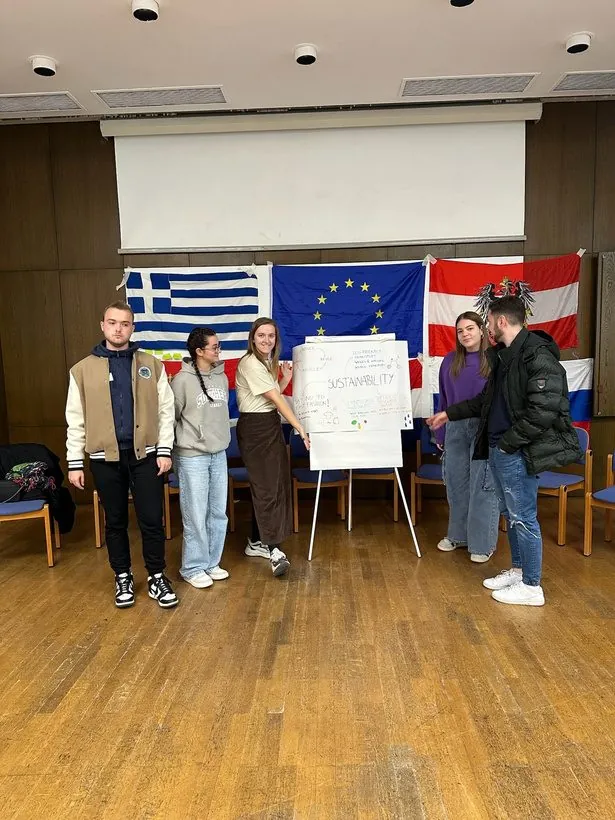
The UN’s 17 Sustainable Development Goals become tangible: students analyse their own consumption, understand the circular economy through a real product and end with a project idea for their school or community.
What students learn
The 17 SDGs – what’s behind them and where they touch everyday life
Sustainable consumption – supply chains, labels and real alternatives
Circular economy – repair, share and reuse instead of throwing away
Your own project idea – a doable plan for your school
How it runs
1SDG trailDiscover 17 goals
2Product checkFrom raw material to waste
3Idea workshopDesign projects
4PitchPresent ideas
2–5 h10–20 studentsfrom age 13Certificate
07 · Climate
Understand the climate, shape the climate
From causes to your own campaign.
Climate change without the doom: students work with real data, understand causes and effects, discuss climate justice and calculate their carbon footprint. To finish, they design their own climate campaign for their school.
What students learn
Causes and effects – understand the climate crisis with real data
Climate justice – who causes it and who bears the consequences
Carbon footprint – measure your everyday life and find levers
Climate campaign – plan an action that works at school
How it runs
1Data checkLearn to read curves
2PerspectivesJustice debate
3FootprintSelf-test and levers
4CampaignPoster, reel, action
2–5 h10–20 studentsfrom age 13Certificate
08 · Civic participation
Have your say, shape your world
How young people move democracy locally.
Participation doesn’t start at 16 at the ballot box. Students find an issue that really affects them, learn the routes to being heard and develop a concrete action plan for their school, district or municipality.
What students learn
Know your options – school council, youth council, petitions and citizens’ initiatives
Frame your issue – turn frustration into a clear, solvable goal
Find allies – plan campaigns and organise support
Talk to politicians – put your case convincingly to decision-makers
How it runs
1My issueWhat bothers us?
2MapWho decides what?
3Action planSteps and roles
4PitchTo real guests
2–5 h10–20 studentsfrom age 13Certificate
09 · Transversal skills
Skills for life
Teamwork, communication, creativity: what counts in every job.
Whether apprenticeship, university or first job: employers look for skills that no single subject teaches. In team challenges, students experience their strengths, get feedback and record their personal skills profile, which goes on their certificate and helps with their next application.
What students learn
Communication – listen, speak clearly, give and receive feedback
Teamwork – share roles, solve conflicts, deliver together
Creativity – find new ways when the plan fails
Self-organisation – keep time, goals and motivation on track
How it runs
1Skills checkWhere do I stand?
2ChallengesTeam tasks
3FeedbackMake strengths visible
4Skills profileFor your portfolio
2–5 h10–20 studentsfrom age 13Certificate
10 · Human rights
Human rights for everyone
Dignity, equality, freedom, and what they mean every day.
Human rights aren’t a distant topic from Geneva: they concern the classroom, social media and the way to school. Students work through case studies, recognise discrimination and practise what civil courage looks like in everyday life.
What students learn
Know your rights – the Universal Declaration of Human Rights and children’s rights
Recognise discrimination – see through prejudice, exclusion and online hate
Digital rights – privacy, freedom of expression and their limits online
Civil courage – step in safely and support others
How it runs
1BarometerWhere do you stand?
2CasesReal examples
3Role-playSwap perspectives
4ActionOur class charter
2–5 h10–20 studentsfrom age 13Certificate
11 · AI workshop
Creative with AI
Songs, videos, podcasts: made yourself with artificial intelligence.
Here it’s all about trying things out: students write prompts, compose their own song with Suno, turn study material into a podcast with NotebookLM and create images and videos. Along the way we clarify what’s fair, allowed and must be labelled.
Suno and NotebookLM
Compose an original song and turn your own study notes into a podcast to listen to and share.
Canva and video tools
Design images, posters and short clips, and learn how to label AI-generated content correctly.
What students learn
Write prompts – phrase precisely and improve results step by step
Create with AI – songs, images and videos with Suno, Canva and more
Learn with AI – use NotebookLM for summaries and podcasts
Stay fair – copyright, labelling and deepfakes
How it runs
1Prompt battleWho nails it?
2Tool stationsMusic, image, video
3Creative projectYour own work in teams
4ShowcasePremiere and reflection
2–5 h10–20 studentsfrom age 13Certificate
12 · Study visits in Vienna
Out of the classroom
Experience the city of the future where it’s being built.
Excursion plus workshop: we visit places where the sustainable city is already a reality, talk to the people there and process the experience straight away in a facilitated idea workshop.
GrünStattGrau
Innovation lab for building greening and the green city of the future: façades, roofs and cooling in a changing climate.
Seestadt Aspern
One of Europe’s largest urban development projects: smart city, mobility, energy and neighbourhood life.
What students learn
Experience it on site – urban development with all your senses, not from a textbook
See connections – climate, building, mobility and community
Discover careers – green jobs in conversation with experts
Your own ideas – what would work in our neighbourhood?
How it runs
1PreparationShort input at school
2Guided tourOn site with experts
3WorkshopReflection and ideas
4TransferIdeas for the school
4–5 h10–20 studentsfrom age 13Certificate
Book a workshopNot sure which format fits? Tell us about your class and we will make a proposal.
For teachers and school staff
Workshops for teachers
Practical professional development for teachers and school staff, at your school or in Vienna, adapted to your team.
01 · For teachers
AI and digital teaching
Use AI to teach better, and teach AI itself.
Teachers try out AI tools for planning, differentiation and feedback, discuss data protection and responsible use, and plan how to build their students’ AI literacy.
AI tools for planning and feedback
Personalised learning with AI
Teaching AI literacy
Data protection and responsible use
Builds on DUAL.AI.TEACHer and AI4VET
02 · For teachers
Game-based learning
Make lessons interactive and inclusive through play.
Teachers experience board games, simulation games and gamified tasks first-hand, then adapt them to their own subjects and classes.
Board games as teaching tools
Simulation games
Gamified tasks and assessment
Designing your own game
Builds on our course The Power of Playing
03 · For teachers
Sustainability education
Bring sustainability into every subject.
Teachers explore whole-school approaches and the GreenComp framework, and try hands-on activities that link sustainability with basic skills.
GreenComp in practice
Whole-school approaches
Sustainability and basic skills
Classroom activities and simulations
Builds on our sustainability education projects
04 · For teachers
Coaching and mentoring
Help students and colleagues grow.
Coaching conversations, mentoring structures and feedback methods for a whole-school culture of development.
Coaching conversations
Peer mentoring for staff
Feedback that motivates
Mentoring programmes for students
Builds on our course Coaching and Mentoring
Supporting teacher education through innovation
We support teacher education through innovative European actions. DUAL.AI.TEACHer, an Erasmus+ Teacher Academy that ACCELERAS initiated, builds teachers’ competence to use AI in teaching and to teach AI itself. Among others, from January 2027 brAIdge will bring AI-based pedagogies for personalised learning into classrooms, and SUSTAIN-SKILLS will link sustainability education with basic skills.
Berufspraktische Tage · For students aged 14 to 19
Ready for training, university and Europe
On our career orientation days, students get to know the EU and Erasmus+, discover their opportunities abroad and work with digital tools they will really need at school, university and work, right up to a finished application folder.
1 or more days
you choose
Up to 20
places per semester
1–10 students
per group
At our office
Vienna, 1st district
Certificate
for every student
EU and Erasmus+
How the EU works and its work for young people
Internships abroad, volunteering, youth exchanges
Find and use funding
Digital tools and AI
Organise and plan with Notion
Design with Canva
Videos, songs and study podcasts with AI
Applications
Application workshop: put together your own documents
Professional application photos
Practise job interviews
Why we offer career orientation days
Many students find it hard to get a suitable, welcoming place for their career orientation days. Young people with a migration background and students from families with less formal education or facing financial difficulties are hit hardest.
As a socially innovative organisation, we know this challenge well. That is why we actively open up access to career orientation days and support young people all the way through.
What everyone takes home
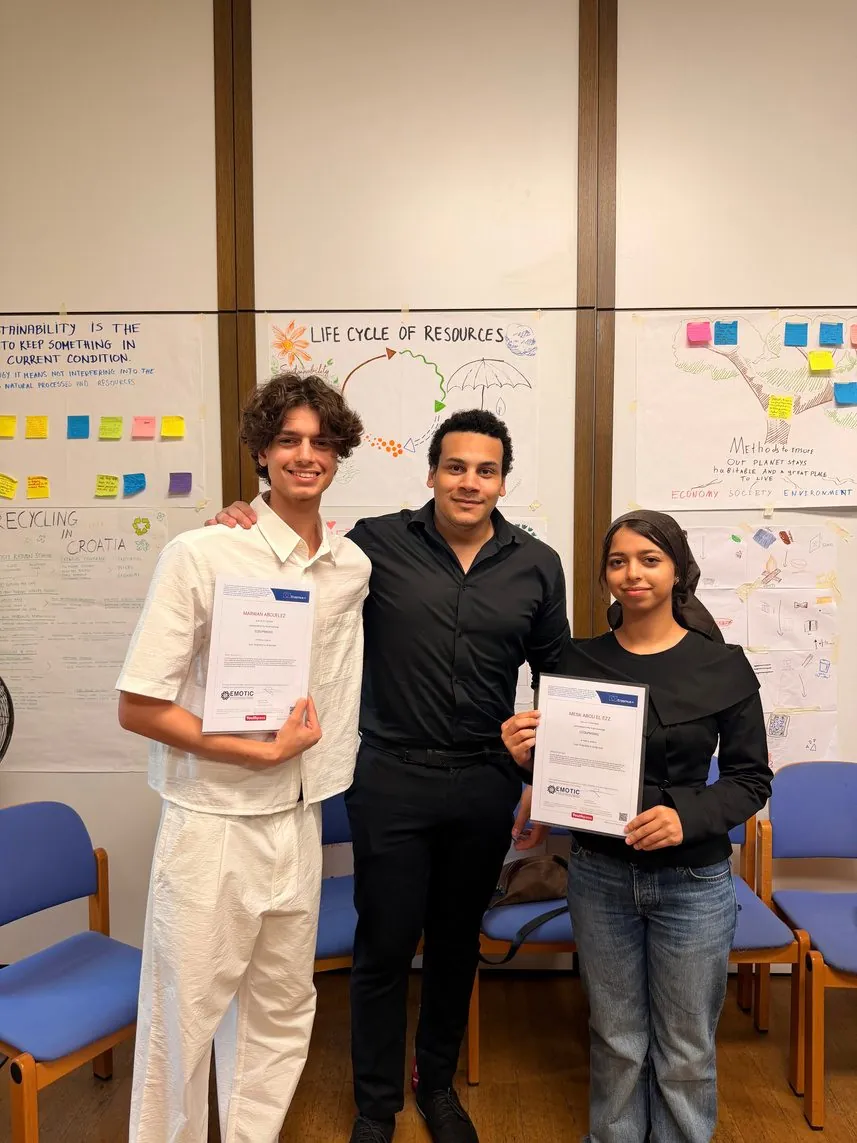
A finished application folder, a professional application photo, their own digital projects and the ACCELERAS certificate.
Every participant receives a certificate listing the competences they gained, ideal for portfolios, applications and their further education.
For portfoliosFor applications
European network
Content from real EU projects
ACCELERAS is a partner in 14 European projects on skills, artificial intelligence, digitalisation, sustainability and civic participation. Our workshop content builds on tested European materials, piloted with learners in several countries.
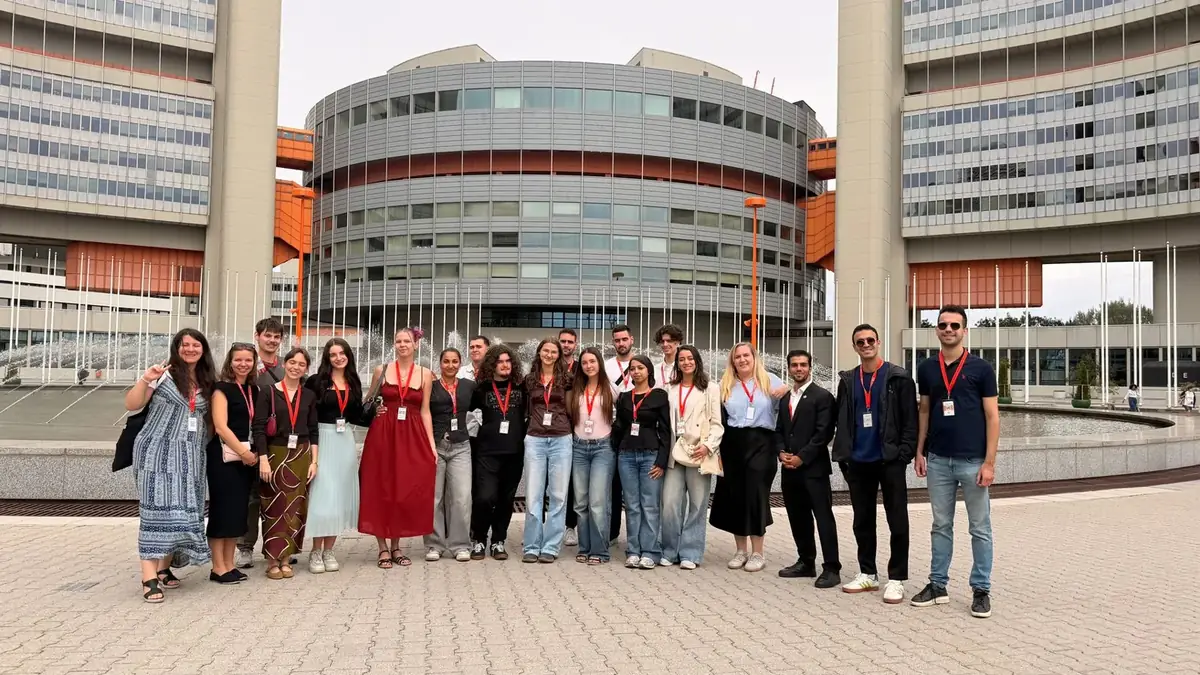
Our associated youth organisation, EMOTiC, regularly organises international youth exchanges, especially in summer, in Austria and across Europe. Travel, accommodation and programme are funded by Erasmus+.
Europe-wide7–10 daysFunded by Erasmus+
Interested? We are happy to tell your class more after a workshop.